
Blog: Understanding Peer Review — The Backbone of Credible Knowledge


Peer review is one of the most important processes in academia, research, and professional publishing. It ensures that the information we read, cite, and rely on is accurate, reliable, and of high quality. Whether you're a student, researcher, or curious reader, understanding how peer review works can help you better evaluate information in today’s content-heavy world.
What is Peer Review?
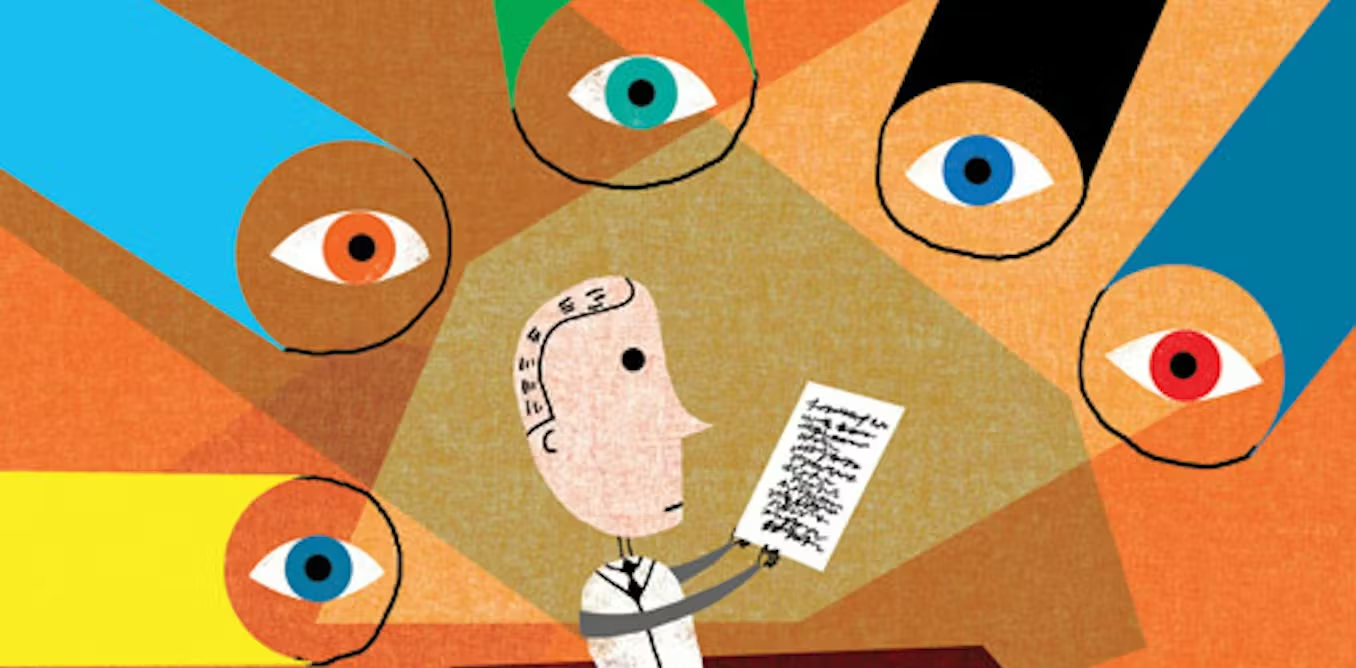
Peer review is a process where experts in a specific field evaluate a piece of work—such as a research paper, article, or study—before it is published. These experts, known as “peers,” assess the quality, validity, originality, and relevance of the work.
In simple terms, it's like having a panel of knowledgeable reviewers double-check your work before it goes public.
How Does the Peer Review Process Work?
- Submission An author submits their work to a journal or publication.
- Initial Screening The editor checks if the submission fits the scope and basic standards.
- Review by Experts The paper is sent to reviewers who: Evaluate methodology and data Check for bias or errors Suggest improvements
- Feedback & Revisions The author may need to revise the work based on reviewer comments.
- Final Decision The paper is accepted, rejected, or sent for further revision.
Types of Peer Review Single-blind: Reviewers know the author, but the author doesn’t know the reviewers Double-blind: Neither party knows the other’s identity Open review: Both identities are known, promoting transparency Why is Peer Review Important? Ensures Quality: Filters out flawed or weak research Builds Credibility: Published work gains trust Encourages Improvement: Constructive feedback strengthens the work Prevents Misinformation: Reduces the spread of incorrect findings Limitations of Peer Review While essential, peer review isn’t perfect: It can be time-consuming Reviewers may have biases Some errors may still go unnoticed Innovative ideas may face resistance Peer Review in the Digital Age With the rise of online publishing, peer review is evolving: Faster review cycles Open-access journals Post-publication reviews Use of AI tools for screening This evolution aims to balance speed with reliability. Conclusion Peer review remains a cornerstone of trustworthy knowledge. While it has its challenges, it plays a crucial role in maintaining the integrity of academic and professional work. As readers and creators, understanding peer review helps us navigate information more critically and responsibly.
Reviews & Comments
No reviews yet. Be the first to write one.